
Running is one of the most natural and effective forms of exercise, yet many runners overlook one crucial component of performance: the posterior chain. This group of muscles, which includes the glutes, hamstrings, and lower back, plays a vital role in running speed, endurance, power, and injury prevention. Neglecting posterior chain strength can lead to inefficient movement, muscular imbalances, and chronic injuries.
This article explores why a strong posterior chain is essential for runners, the impact of weak glutes and hamstrings on performance, and practical exercises to build strength and efficiency. Whether you’re training for a marathon, improving sprinting ability, or simply aiming for pain-free running, understanding and strengthening your posterior chain will take your running to the next level.
Understanding the Posterior Chain
The posterior chain refers to the interconnected muscles that run along the backside of the body. The key muscles involved in running include:
- Gluteus maximus, medius, and minimus – The largest muscle group in the body, responsible for propulsion, stability, and power.
- Hamstrings (biceps femoris, semitendinosus, and semimembranosus) – Crucial for knee flexion, hip extension, and deceleration while running.
- Erector spinae and lower back muscles – Help maintain posture, stabilise the spine, and absorb impact forces.
- Calves (gastrocnemius and soleus) – Assist with push-off and provide lower leg stability.
These muscles work together to generate force, absorb impact, and maintain efficient movement patterns. A weak posterior chain can cause an over-reliance on the quadriceps, leading to imbalances, inefficient stride mechanics, and an increased risk of injury (Schache et al., 2012).
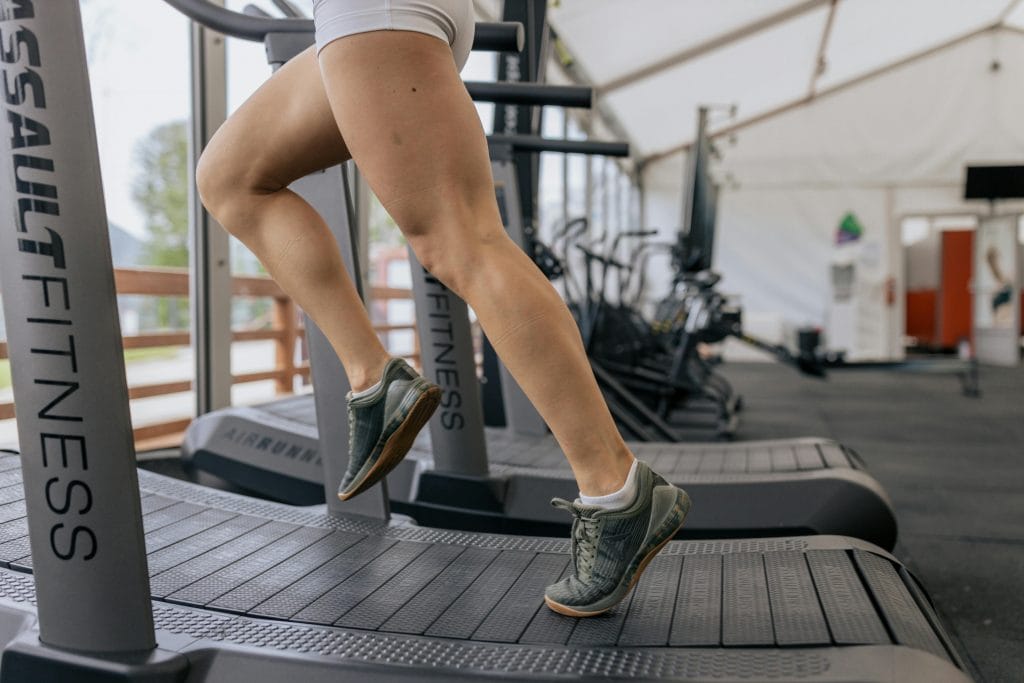
The Role of the Posterior Chain in Running Performance
1. Running Speed and Power
The glutes and hamstrings play a key role in generating power during the push-off phase of running. When you run, each stride involves a hip extension, where the glutes and hamstrings contract to propel you forward. Studies have shown that elite sprinters and distance runners tend to have stronger and more developed posterior chain muscles, which allows them to generate more force with each step (Weyand et al., 2000).
A strong posterior chain helps with:
- Explosive acceleration – Strong glutes and hamstrings contribute to a powerful push-off, helping runners start faster and maintain speed.
- Stride length and efficiency – Weakness in these muscles can shorten stride length, forcing the quadriceps to work harder, which leads to earlier fatigue.
- Improved running economy – A well-developed posterior chain allows for greater energy transfer, meaning you use less effort to run at the same pace.
2. Injury Prevention
Running places a high amount of stress on the lower body, and imbalances between the anterior (front) and posterior (back) muscles can lead to common running injuries such as:
- Hamstring strains – Weak hamstrings are more susceptible to strain, especially during sprinting (Opar et al., 2012).
- Runner’s knee (patellofemoral pain syndrome) – Often linked to weak glutes, which fail to stabilise the pelvis and knees during running.
- Lower back pain – Poor posterior chain activation can place excessive stress on the lower back, leading to discomfort and injury.
Strengthening these muscles ensures proper load distribution, reducing strain on the joints and minimising injury risk (Lee et al., 2018).
3. Endurance and Fatigue Resistance
Running is a repetitive motion, and over time, fatigue sets in. The posterior chain muscles play a crucial role in maintaining running form and efficiency over long distances. When these muscles are weak, the body compensates by relying more on the quadriceps, which can lead to inefficient movement and early fatigue.
A strong posterior chain helps:
- Improve postural endurance, preventing slouching and reducing energy leaks.
- Maintain stride mechanics, ensuring consistent propulsion throughout a run.
- Reduce impact forces, allowing muscles to absorb shock more effectively.
Research shows that runners with stronger posterior chains tend to perform better in endurance events, as they maintain proper biomechanics longer than those with weaker lower-body strength (Santos-Concejero et al., 2014).
Best Exercises to Strengthen the Posterior Chain for Runners
1. Deadlifts
A compound movement that targets the glutes, hamstrings, and lower back.
2. Romanian Deadlifts (RDLs)
Focuses on hamstring and glute development while improving hip mobility.
3. Hip Thrusts
Directly enhances glute activation and strength, which improves propulsion.
4. Nordic Hamstring Curls
Proven to reduce hamstring injuries in athletes.
5. Bulgarian Split Squats
Single-leg strength exercise that enhances balance and stability.
Why a Strong Posterior Chain is Essential for Runners
A strong posterior chain is one of the most overlooked but essential aspects of running performance. By strengthening the glutes, hamstrings, and lower back, runners can improve speed, endurance, and efficiency while reducing the risk of injury. Incorporating targeted strength training into your routine will not only enhance running economy but also help you stay pain-free and perform at your best.
For optimal results, runners should aim to include posterior chain exercises at least 2–3 times per week alongside their running program.
References
- Schache, A. G., Dorn, T. W., Blanch, P. D., Brown, N. A. T., & Pandy, M. G. (2012). Mechanics of the human hamstring muscles during sprinting. Medicine & Science in Sports & Exercise.
- Weyand, P. G., Sternlight, D. B., Bellizzi, M. J., & Wright, S. (2000). Faster top running speeds are achieved with greater ground forces not more rapid leg movements. Journal of Applied Physiology.
- Opar, D. A., Williams, M. D., & Shield, A. J. (2012). Hamstring strain injuries: Factors that lead to injury and re-injury. Sports Medicine.
- Santos-Concejero, J., et al. (2014). Influence of running experience and running economy on running performance. Journal of Strength and Conditioning Research.