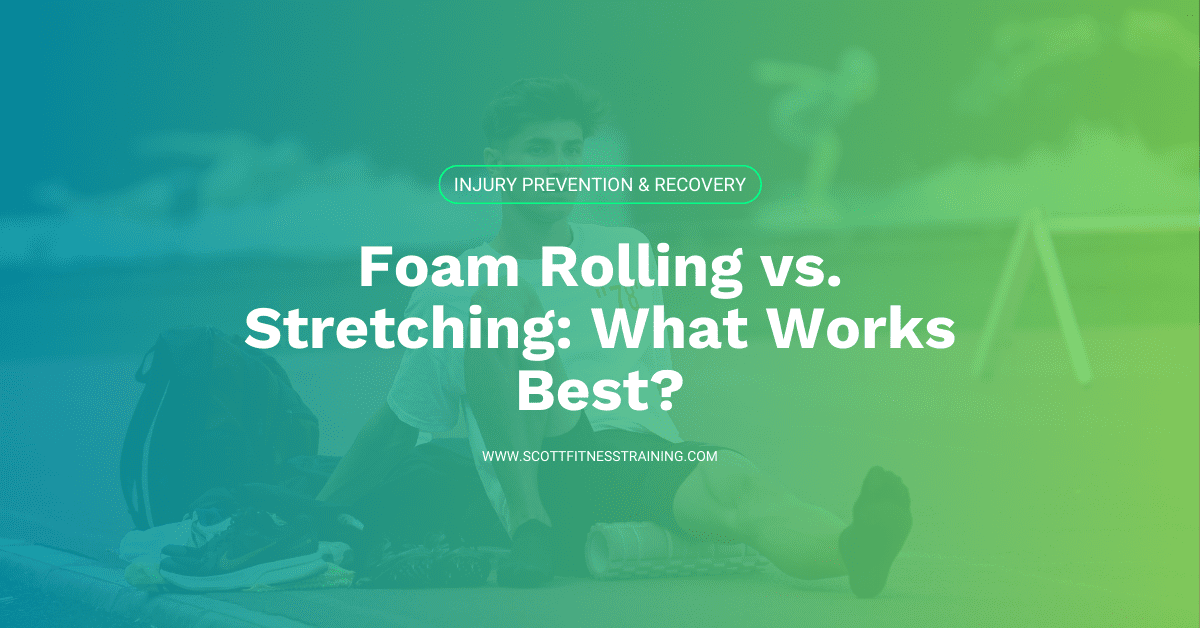
If you’ve spent any time in the gym or around athletes, you’ve probably heard plenty of advice about recovery techniques. Two of the most common methods for improving flexibility, reducing muscle soreness, and boosting performance are foam rolling and stretching. Both are effective, but they serve different purposes and offer unique benefits. Understanding the differences between foam rolling and stretching can help you decide which one works best for your specific goals. So which is best, Foam Rolling vs. Stretching?
In this article, we’ll explore the science behind foam rolling and stretching, compare their benefits, and help you determine how to incorporate both into your training routine for optimal results.
What is Foam Rolling?
Foam rolling, also known as self-myofascial release (SMR), is a form of self-massage that targets the fascia—the connective tissue that surrounds muscles. By applying pressure to tight areas using a foam roller, you can release knots (trigger points) and improve muscle function.
Research has shown that foam rolling can increase range of motion, reduce muscle soreness, and improve recovery without compromising muscle strength (Cheatham et al., 2015). Unlike static stretching, foam rolling focuses more on soft tissue quality, helping to break up adhesions and promote better blood flow.
How Foam Rolling Works
Foam rolling works by applying direct pressure to areas of tightness or tension. This pressure helps reduce muscle stiffness by improving the sliding ability of the fascia and increasing blood flow to the area. It’s often used before workouts to prepare muscles for movement or after workouts to aid recovery.
Common areas for foam rolling include:
- Quadriceps
- Hamstrings
- Calves
- Glutes
- IT band

What is Stretching?
Stretching has been a cornerstone of fitness routines for decades. It involves elongating muscles to improve flexibility and range of motion. There are different types of stretching, with static and dynamic stretching being the most common.
- Static Stretching: Holding a stretch for 20–30 seconds to lengthen a specific muscle. This type of stretching is often used post-workout.
- Dynamic Stretching: Moving muscles through their full range of motion in a controlled manner, typically used as part of a warm-up.
Stretching helps maintain flexibility, improve posture, and reduce muscle tension. Studies have shown that regular stretching can enhance performance in activities that require a high degree of flexibility (Behm et al., 2016).
How Stretching Works
Stretching increases muscle length and improves joint range of motion. It helps prevent stiffness and reduces the risk of injury, especially for athletes who engage in activities that require large ranges of motion, such as running or gymnastics.
Foam Rolling vs. Stretching: Key Differences
While both foam rolling and stretching aim to improve muscle function and prevent injuries, they do so in different ways.
- Target Areas: Foam rolling targets the fascia and focuses on soft tissue quality, while stretching primarily lengthens the muscle fibers.
- Purpose: Foam rolling is often used for releasing tension and improving tissue mobility, whereas stretching is more focused on increasing flexibility and joint range of motion.
- Timing: Foam rolling can be done before or after a workout, while stretching is generally more effective after workouts to reduce muscle stiffness.
- Scientific Support: Research supports the use of foam rolling for reducing delayed onset muscle soreness (DOMS) and improving short-term range of motion without affecting performance. Stretching, on the other hand, is essential for maintaining long-term flexibility and preventing injuries related to tight muscles.
The Benefits of Foam Rolling
Foam rolling offers numerous benefits for athletes and recreational exercisers alike. Here are some of the most significant advantages:
Improves Range of Motion: Studies show that foam rolling can increase range of motion in the short term without reducing muscle strength (Mohr et al., 2014).
Reduces Muscle Soreness: Foam rolling can decrease the severity of delayed onset muscle soreness (DOMS) after intense workouts, helping you recover faster.
Enhances Circulation: By improving blood flow to the muscles, foam rolling helps flush out metabolic waste and bring in nutrients needed for recovery.
Increases Tissue Quality: Regular foam rolling can help break up adhesions and knots in the fascia, promoting smoother movement patterns and reducing injury risk.
The Benefits of Stretching
Stretching remains a vital part of any fitness routine, especially for those looking to maintain or improve flexibility.
- Increases Flexibility: Static stretching is one of the best ways to improve muscle length and joint range of motion, which is crucial for sports like yoga, dance, and running.
- Improves Posture: Stretching helps correct muscle imbalances caused by prolonged sitting or poor posture.
- Reduces Muscle Tension: Regular stretching can help relieve tension in commonly tight areas, such as the lower back, neck, and hamstrings.
- Enhances Relaxation: Stretching has a calming effect on the body, especially when paired with deep breathing exercises.
Which One is Better for You?
The answer to this question depends on your individual goals and needs. For most people, the best approach is to incorporate both foam rolling and stretching into their routine.
When to Prioritize Foam Rolling
- If you experience frequent muscle tightness or knots
- Before workouts to improve muscle readiness and mobility
- After workouts to reduce soreness and enhance recovery
When to Prioritize Stretching
- If you have poor flexibility or limited range of motion
- Post-workout to cool down and reduce muscle stiffness
- As part of a long-term strategy for injury prevention and posture correction
For runners and endurance athletes, a combination of dynamic stretching before a run and foam rolling afterward can provide the best of both worlds—enhanced mobility and reduced muscle soreness.
Practical Tips for Incorporating Both
Warm-Up with Dynamic Stretching: Use dynamic stretching to prepare your body for movement. Exercises like leg swings, walking lunges, and arm circles are excellent for increasing blood flow and improving mobility.
Foam Roll Post-Workout: Spend 5–10 minutes foam rolling the key muscle groups you worked during your session. Focus on areas that feel tight or sore.
Static Stretch for Flexibility: Include static stretching at the end of your workout to help lengthen muscles and promote relaxation. Hold each stretch for 20–30 seconds.
Stay Consistent: The benefits of both foam rolling and stretching are cumulative. Incorporate them regularly into your routine for the best results.
For runners, combining recovery with strength training is key. Check out our Best Strength Exercises for Runners to enhance your routine.
Foam Rolling vs. Stretching: What Works Best?
Foam rolling and stretching are both valuable tools in any fitness routine, but they serve different purposes. Foam rolling focuses on improving tissue quality and reducing muscle soreness, while stretching enhances flexibility and joint range of motion. By understanding the strengths of each method, you can create a balanced recovery strategy that keeps you feeling strong, flexible, and injury-free.
For most people, the ideal approach is to combine both. Use foam rolling to prepare your body for movement and aid in recovery, while stretching helps maintain long-term flexibility and prevent injuries. Whether you’re an elite athlete or just starting your fitness journey, incorporating these techniques will help you perform at your best.
Recovery techniques are essential for maintaining performance. Discover how to effectively warm up and cool down in our guide on The Importance of Warming Up and Cooling Down.
References:
- Cheatham, S. W., et al. (2015). The efficacy of foam rolling on range of motion, recovery, and performance: A systematic review. International Journal of Sports Physical Therapy.
- Behm, D. G., et al. (2016). Acute and chronic effects of static stretching on strength performance. European Journal of Applied Physiology.
- Mohr, A. R., et al. (2014). Effect of foam rolling and static stretching on passive hip-flexion range of motion. Journal of Sport Rehabilitation.