
Training Principles & Physiological Concepts
How and why the body changes in response to exercise.
- Adaptation:
- The process by which the body responds to repeated exposure to stress. In the context of training, adaptation refers to improvements in strength, endurance, or muscle size resulting from consistent stimulus and recovery.
- Anabolism:
- Metabolic processes that build tissue and store energy — key for muscle growth, recovery, and adaptation.
- Catabolism:
- The breakdown of tissue for energy, often occurring during calorie deficits, illness, or overtraining. Muscle loss can occur when catabolism outpaces anabolism.
- Homeostasis:
- The body’s built-in ability to maintain internal stability — such as temperature, pH levels, blood sugar, and hormone balance — even under stress. During training, we temporarily disrupt homeostasis, prompting the body to adapt and come back stronger.
- Overreaching:
- A temporary spike in training volume or intensity that causes short-term fatigue. If followed by rest, it can lead to accelerated progress. If not, it can evolve into overtraining.
- Overtraining Syndrome (OTS):
- A chronic condition where performance declines, recovery slows, and physical/mental health suffers due to excessive training without adequate rest.
- Progressive Overload:
- The foundational principle of making training harder over time to continually stimulate adaptation. This can be achieved by increasing weight, volume, frequency, or intensity.
- Specificity:
- The principle that training should match the intended outcome. For example, training for marathon running requires different programming than training for a powerlifting meet.
- Supercompensation:
- The phase where the body adapts after rest following intense training. Performance levels actually rebound higher than they were before the workout, making this the sweet spot for gains.
Neuromuscular & Bioenergetic Concepts
How muscles are activated and fueled.
- ATP‑PC System:
- Fuels efforts up to 10 seconds (sprints, max lifts) using ATP and creatine phosphate (PC).
- Glycolytic System:
- Fuels medium bursts (15s–2min). Breaks down glucose (sugar) without oxygen, producing lactic acid as a byproduct.
- Oxidative System:
- Fuels endurance (long efforts over 2 minutes) using Fats, Carbohydrates and Proteins.
- Lactate Threshold:
- The point during intense effort when lactate accumulates faster than it can be cleared, causing fatigue.
- Motor Unit:
- A motor neuron and the muscle fibres it activates. More recruited units = more force.
- Neuromuscular Adaptation:
- Improvements in strength due to better communication between nerves and muscles, common in beginners.
- Rate Coding:
- The frequency at which nerve impulses are sent to muscle fibres, affecting force production.
- Size Principle:
- Motor units are recruited from smallest (slow-twitch) to largest (fast-twitch) depending on force demand.
Anatomy & Biomechanics
Key structures and how they create movement.
3.1 Muscle Groups & Roles
- Anterior Chain:
- Muscles on the front side of the body — including quads, hip flexors, chest, and abdominals. These muscles often become dominant with modern posture.
- Posterior Chain:
- The group of muscles on the back of the body, including glutes, hamstrings, spinal erectors, and lats. Essential for explosive power, posture, and spinal stability.
- Agonist:
- The primary muscle working in an exercise. For example, the quadriceps in a squat.
- Antagonist
- The muscle that opposes the agonist, lengthening during the movement. For example, the hamstrings during a squat.
- Synergist:
- Assists the prime mover.
- Stabiliser:
- Supports the movement by anchoring joints and controlling posture.
3.2 Types of Muscle Action
- Concentric:
- Muscle shortens (e.g. curling a dumbbell upwards).
- Eccentric:
- Muscle lengthens under load (e.g. lowering a dumbbell during bicep curl).
- Isometric:
- Muscle is active but not changing length (e.g. planks).
3.3 Connective Tissue
- Fascia:
- The web of connective tissue that wraps around muscles and organs.
- Ligament:
- Connects bone to bone, stabilising joints.
- Tendon:
- Connects muscle to bone.
3.4 Movement Mechanics
- Closed Chain Exercises:
- Exercises involve the distal end of the limb (hands or feet) being fixed, such as squats or push-ups.
- Open Chain Exercises:
- Exercises involve a freely moving limb, such as leg extensions or bench presses.
- Joint Angle:
- The degree of flexion or extension in a joint during movement. Optimising joint angles can influence which muscles are targeted and the risk of injury.
- Kinetic Chain:
- A concept describing how muscles, joints, and limbs work together to produce movement. In a functional kinetic chain, forces are transferred efficiently from one segment to another — as seen in a deadlift or sprint.
- Moment Arm:
- The perpendicular distance between the joint axis and the line of force. A longer moment arm increases the mechanical demand on a muscle, making an exercise more difficult.
- Planes of Motion (Sagittal, Frontal, Transverse)
- Sagittal:
- Divides the body into left and right halves. Movements include forward and backward actions like squats, lunges, and bicep curls.
- Frontal:
- Divides the body into front and back halves. Movements include lateral raises, side lunges, and jumping jacks.
- Transverse:
- Divides the body into top and bottom halves. Movements include rotational exercises like woodchoppers or Russian twists.
Training Variables & Monitoring Tools
What you can manipulate or measure in a programme.
- 1RM (One‑Repetition Maximum):
- The heaviest amount of weight a person can lift for one complete, properly executed repetition of a given exercise. It’s often used as a benchmark to determine strength levels and to calculate training loads in percentage-based programs.
- Heart‑Rate Zones
- Categories of exercise intensity based on a percentage of your maximum heart rate. Common zones include:
- Zone 1 (recovery)
- Zone 2 (endurance)
- Zone 3 (tempo)
- Zone 4 (threshold)
- Zone 5 (maximum effort)
- These are used to tailor cardio programming and improve aerobic/anaerobic efficiency.
- Categories of exercise intensity based on a percentage of your maximum heart rate. Common zones include:
- BPM
- A unit of measurement for heart rate, representing the number of heartbeats in one minute. It’s a vital metric used to gauge cardiovascular effort, training intensity, and recovery.
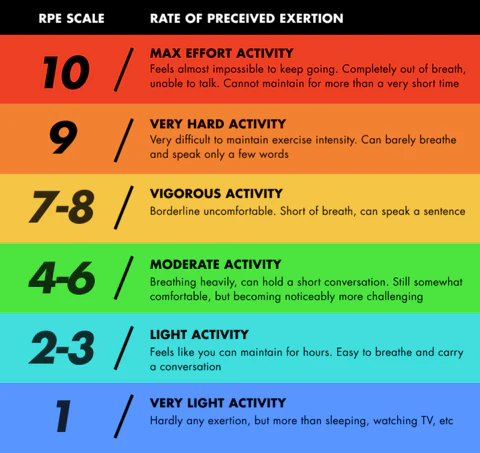
- Rate of Perceived Exertion (RPE)
- A subjective scale (typically from 1 to 10) that helps individuals gauge how hard they feel they’re working during exercise. An RPE of 10 represents maximal effort; RPE is useful for autoregulating intensity in training sessions.
- Reps in Reserve (RIR):
- How many reps you estimate you could have done before failure. Used to gauge intensity.
- Time Under Tension (TUT):
- The amount of time a muscle is under load in a set. Influences hypertrophy and strength stimulus.
- Read our article to learn more about Time Under Tension.
- Volume / Intensity:
- MRV (Maximal Recoverable Volume):
- The most you can recover from.
- MEV (Minimum Effective Volume):
- The least you need to make progress.
- MRV (Maximal Recoverable Volume):
- Work‑to‑Rest Ratio
- The ratio of time spent working versus resting in training. For example, a 1:2 work-to-rest ratio might involve 30 seconds of effort followed by 60 seconds of rest. Manipulating this affects aerobic and anaerobic adaptations.
Programme‑Design Methods
Popular ways to structure weeks, blocks, or sets.
- Cluster Sets:
- Sets that break up reps into smaller groups with short intra-set rest, allowing higher intensity or volume.
- Compound Sets (same muscle group):
- Two exercises targeting the same muscle group performed consecutively without rest.
- Drop Sets:
- Performing an exercise to failure, then immediately reducing the weight and continuing for more reps.
- Giant Sets:
- Three or more exercises performed back-to-back, usually for the same muscle group.
- Linear Periodisation:
- A training method where intensity increases and volume decreases over time, ideal for strength peaking.
- Pyramid Training:
- Increasing or decreasing weight across sets, often used to improve strength and hypertrophy.
- Rest‑Pause:
- An advanced training technique involving a brief pause within a set to allow partial recovery before continuing. This method pushes the muscle past normal fatigue limits and is often used to break plateaus.
- Supersets (opposing muscle groups):
- Two exercises performed back-to-back with no rest, often pairing opposing muscle groups.
- Undulating Periodisation:
- Varying training intensity and volume across days or weeks to prevent plateaus and overtraining.
Performance & Fatigue Language
What limits output and how quickly you can produce force.
- Central Nervous System (CNS) Fatigue:
- Refers to a reduction in motor drive due to overtraining or high-intensity work. CNS fatigue can impact coordination, strength, motivation, and focus. Recovery strategies like proper sleep and deload weeks are essential.
- Energy‑System Dominance:
- Refers to which energy system (ATP-PC, glycolytic, oxidative) is primarily used during an activity. Tailoring training to the dominant system improves performance and efficiency in sport-specific tasks.
- Local Muscular Fatigue:
- Occurs when a specific muscle group experiences a temporary decline in performance due to metabolic by-products and energy depletion. It’s common after high-rep or isolation work.
- Rate of Force Development (RFD):
- How quickly the body can produce force — a crucial factor in athletic performance. Improving RFD is key for explosive activities like sprinting, jumping, or Olympic lifts.
- Sympathetic vs Parasympathetic Nervous System:
- Sympathetic (“fight or flight”): Increases heart rate, adrenaline, and muscle readiness — activated during intense training.
- Parasympathetic (“rest and digest”): Supports recovery, digestion, and relaxation. A balance between the two is vital for performance longevity.
Recovery & Hormonal Factors
What drives rebuilding between sessions.
- Circadian Rhythm:
- The body’s internal 24-hour clock that governs sleep-wake cycles, hormone release, and metabolic processes. A consistent circadian rhythm improves training performance and recovery outcomes.
- Cortisol:
- A catabolic hormone released during physical or emotional stress. While it helps mobilise energy, chronically elevated levels can interfere with recovery, suppress immunity, and promote muscle breakdown.
- Delayed Onset Muscle Soreness (DOMS):
- The muscle stiffness and soreness felt 24 to 72 hours after an intense or unfamiliar workout. DOMS is thought to result from micro-tears in muscle fibres and the associated inflammatory response. It’s most common after eccentric training.
- Growth Hormone (GH):
- Released by the pituitary gland, GH promotes cell regeneration, increases fat metabolism, and supports tissue growth — including muscle and bone.
- Insulin‑Like Growth Factor 1 (IGF‑1):
- A hormone stimulated by GH that supports muscle repair, hypertrophy, and recovery. It plays a key role in anabolic processes.
- Recovery:
- The full biological and psychological process of returning the body to baseline post-training. Includes muscle repair, nervous system reset, glycogen replenishment, and sleep.
- Sleep Hygiene:
- Habits and environmental factors that promote quality sleep — such as regular bedtime routines, avoiding screens before bed, and sleeping in a cool, dark room. Essential for hormone regulation and full-body recovery.
- Testosterone:
- A key anabolic hormone that promotes muscle growth, increases recovery capacity, and enhances physical performance. It plays a major role in strength development, particularly in male athletes.
Nutrition & Supplement Basics
- Caloric Deficit / Surplus:
- Surplus: Consuming more calories than you burn, typically used to support muscle growth or weight gain during bulking phases.
- Deficit: Consuming fewer calories than you burn, necessary for fat loss. A sustainable deficit is typically around 300–500 calories per day, or 5% to 20% of total daily expenditure. Do you know what your BMR (Basal Metabolic Rate) and TDEE (Total Daily Energy Expenditure) are? Use our calculator and find out!
- Leucine Threshold:
- The minimum amount of the amino acid leucine needed in a meal to trigger muscle protein synthesis. Typically around 2–3 grams, which is why quality protein sources are important.
- Macronutrients (Protein, Carbs, Fat):
- The three major nutrients — protein, carbohydrates, and fat — required in large quantities for energy and recovery. Each plays a distinct role in fuelling performance and supporting muscle repair and growth.
- Micronutrients:
- Vitamins and minerals required in small amounts for essential physiological functions like energy production, nerve signalling, and bone health. Examples include iron, zinc, vitamin D, and magnesium.
- Protein Synthesis:
- The process of building new muscle protein in response to training and adequate nutrition. Triggered most effectively by resistance training and dietary protein.
Related metrics: BMR, TDEE
Mobility, Flexibility & Joint Health
- Active / Passive Range of Motion (ROM):
- Active ROM: The movement a person can produce voluntarily through muscular contraction. It reflects true mobility.
- Passive ROM: The amount of movement a joint can achieve when moved externally (e.g. by a therapist or stretch strap).
- Dynamic Stretching / Static Stretching:
- Dynamic: Involves active movements that move joints through their range of motion. Typically performed before workouts, it increases blood flow and neural activation, preparing the body for movement.
- Static: Involves holding a stretch for 15–60 seconds at the end of a muscle’s range. It’s best used after training to improve flexibility and reduce muscle tension.
- Hyperextension / Hyperflexion:
- Movements that extend or flex a joint beyond its normal range. While some flexibility is functional, repeated or uncontrolled hyperextension can increase injury risk.
- Joint Capsule:
- A fibrous connective tissue that surrounds and stabilises synovial joints. Damage or stiffness in the joint capsule can restrict mobility.
- Joint Integrity:
- Refers to the health of a joint’s structure — including cartilage, ligaments, and joint surfaces. High joint integrity allows pain-free, efficient movement.
- Joint Stability:
- The ability of a joint to maintain position and resist unwanted movement. Stability is enhanced by strong ligaments, balanced musculature, and proper motor control.
- Mobility:
- Mobility refers to the ability of a joint to move actively through its full range of motion. It involves muscular control, stability, and flexibility. High mobility is essential for optimal movement mechanics, especially in exercises like deep squats or overhead presses.
- Flexibility:
- Flexibility is the passive ability of muscles or muscle groups to lengthen. It differs from mobility in that it doesn’t require strength or active control. Good flexibility can reduce injury risk and improve posture, particularly in static positions or stretching routines.
- Myofascial Release:
- A technique (e.g. foam rolling) that applies pressure to soft tissue to reduce stiffness and improve movement. Often used to address trigger points or muscular tightness.
- Proprioception:
- The body’s awareness of its position in space. Essential for coordination, balance, and agility. It can be improved through balance training and unilateral exercises.
- Synovial Fluid:
- A viscous fluid within joints that lubricates surfaces and reduces friction during movement. Movement helps circulate this fluid, keeping joints healthy.
- Neuromuscular Control:
- The subconscious control of movement through proper coordination between the nervous system and muscular system. Crucial for athletic performance and injury prevention.
Exercise Categories & Training Styles
- Aerobic Exercise:
- A form of low- to moderate-intensity physical activity that relies primarily on the use of oxygen to generate energy. Common examples include walking, cycling, swimming, and steady-state running. Aerobic exercise enhances cardiovascular health, fat metabolism, and endurance capacity.
- Anaerobic Exercise:
- High-intensity efforts where the body relies on glucose as the primary fuel source instead of oxygen. It includes sprinting, heavy resistance training, and high-intensity intervals. Anaerobic training improves power, strength, and metabolic conditioning.
- Bodyweight Exercise:
- Exercises that use one’s own body mass as resistance rather than equipment. They are excellent for developing functional strength, coordination, and core stability. Examples include push-ups, squats, lunges, and pull-ups.
- Boot Camp:
- A high-energy workout combining strength training and cardiovascular exercises, often structured in circuits or intervals. Boot camps are designed to improve overall fitness and often simulate a military-style training environment.
- Cardio:
- Short for cardiovascular exercise, it refers to any activity that raises the heart rate and enhances the ability of the heart and lungs to supply oxygen to working muscles. Examples include jogging, cycling, swimming, and rowing.
- Circuit Training:
- A sequence of exercises performed one after the other with minimal rest between them. Circuits can be designed to target different muscle groups or energy systems and are effective for improving strength, endurance, and metabolic fitness.
- Cross Training:
- Involves incorporating a variety of training methods or modalities to enhance overall fitness and reduce the risk of overuse injuries. A runner might include swimming, cycling, and strength training to complement their programme.
- Deadlift:
- A foundational strength movement where a barbell is lifted from the floor to a standing position. It primarily targets the posterior chain — glutes, hamstrings, back, and core — and is a staple in strength and power programmes.
- Fartlek Training:
- A style of running training that blends continuous steady-state and interval work. The term, Swedish for “speed play,” allows the athlete to alternate between varying intensities and durations of effort and recovery based on feel.
- Full‑Body Workout:
- A training session that activates all major muscle groups. Full-body routines are often used for general fitness, time-efficient workouts, or beginners aiming to build a solid foundation of strength and coordination.
- High‑Impact / Low‑Impact:
- High Impact: Exercises that involve movements where both feet leave the ground, such as jumping, bounding, or plyometrics. High-impact activities increase joint stress but can enhance bone density and athletic performance when used appropriately.
- Low Impact: Exercises that minimise stress on the joints by keeping at least one foot in contact with the ground at all times. Examples include walking, swimming, and using elliptical machines — ideal for beginners, older adults, or injury rehab.
- High‑Intensity Interval Training (HIIT) / Tabata:
- A popular method involving short, intense bursts of effort followed by periods of rest or low-intensity recovery. HIIT boosts cardiovascular capacity, metabolic rate, and fat loss while requiring less total training time.
- Tabata: A type of HIIT involving 20 seconds of maximal effort followed by 10 seconds of rest, repeated for eight rounds. Tabata is effective for improving cardiovascular fitness in short sessions.
- Incline Bench / Running (see Incline):
- Interval Training (general):
- Training that alternates between periods of high effort and active recovery or rest. It improves aerobic and anaerobic capacity and is widely used across endurance and performance training domains.
- Isometric Exercise:
- Strength training that involves contracting a muscle without any visible movement in the joint angle. Examples include planks, wall sits, and static holds. These exercises build strength and stability.
- Metabolic Conditioning (MetCon)
- A style of training that blends strength and cardio to maximise calorie burn and work output. These sessions challenge multiple energy systems and are common in CrossFit and athletic conditioning.
- Military Press:
- A vertical pressing exercise typically performed standing with a barbell or dumbbells. It targets the shoulders, upper chest, and triceps and requires core stability and control through the lift.
- Pilates:
- A low-impact exercise method focused on controlled movements that emphasise core strength, flexibility, posture, and muscle balance. Classes often use mats or specialised equipment like reformers.
- Plank:
- An isometric core exercise involving a neutral spine held in a prone position, supported by the forearms and toes. It builds endurance in the abdominals, obliques, and spinal stabilisers.
- Plyometrics:
- Explosive, high-impact movements such as box jumps, jump squats, and clap push-ups. Plyometric training enhances muscular power, coordination, and fast-twitch fibre recruitment.
- Powerlifting:
- A strength sport focused on three maximal-effort lifts: the squat, bench press, and deadlift. Training in powerlifting is geared toward increasing maximal strength and neural efficiency.
- Push‑Pull‑Legs (PPL):
- A training split that divides the body into movement patterns:
- Steady‑State Cardio:
- Cardiovascular exercise performed at a consistent, moderate pace for an extended period. It promotes aerobic endurance and is effective for fat metabolism and general conditioning.
- Strength Training:
- A mode of training focused on improving muscular strength through resistance. Exercises are typically performed using weights, machines, bands, or body weight. Strength training enhances performance, joint stability, and metabolic health.
- Unilateral Training:
- Movements that focus on one limb at a time, such as single-leg squats or single-arm rows. Unilateral work improves muscle imbalances, stability, and coordination.
- Warm‑Up/Cool-Down:
- A series of low-intensity movements and mobility drills performed at the beginning of a workout to prepare the body. A proper warm-up raises heart rate, increases joint lubrication, and enhances neuromuscular readiness.
- Cool-Down: Returning the body to it’s natural resting state (homeostasis). See below.
Generic Fitness Terms & Acronyms
- Active Recovery:
- A low-intensity activity performed after a high-intensity workout or on rest days to promote blood flow, reduce muscle stiffness, and speed up recovery. Examples include light jogging, cycling, walking, yoga, or dynamic stretching.
- AMRAP (As Many Repetitions As Possible):
- A training style where you perform as many reps or rounds of a specific exercise (or set of exercises) as possible within a given time frame. Often used in metabolic conditioning workouts to test muscular endurance and work capacity.
- Anaerobic Threshold:
- The exercise intensity at which the body transitions from aerobic metabolism (using oxygen) to anaerobic metabolism (without oxygen). It marks the point where lactate begins to accumulate in the blood faster than it can be cleared, often used to guide interval training or endurance performance.
- Body Mass Index (BMI):
- A calculation using height and weight to estimate body fatness. Though widely used in clinical settings, it has limitations, especially for athletes and individuals with high lean mass, as it does not distinguish between fat and muscle.
- Burnout Set:
- A set performed to complete muscular fatigue, typically at the end of a workout. The goal is to exhaust the muscle fibres by pushing beyond normal training volume. Burnout sets often use lighter weight and high reps to achieve failure.
- Conditioning:
- Conditioning refers to training that enhances the efficiency of the cardiovascular and muscular systems to perform sustained physical activity. It’s an umbrella term often used to describe endurance, speed, and sport-specific drills that improve overall fitness and stamina.
- Cool-Down:
- A period of light activity following a workout designed to gradually lower heart rate and breathing, reduce blood pooling in the limbs, and assist with recovery. Cooldowns may include light cardio, stretching, or breathing exercises. Bringing the body back to it’s natural resting state of homeostasis.
- Core:
- The collective term for the muscles of the midsection — including the rectus abdominis, obliques, transverse abdominis, pelvic floor, and lower back. These muscles stabilise the spine and pelvis, and are fundamental to nearly every movement in athletics and daily life.
- Dynamic Set:
- A training approach that involves manipulating reps and load across a set to challenge muscle fibres in different ways. Dynamic sets may combine lighter and heavier reps within one set to create metabolic stress and mechanical tension.
- Dynamic Warm-Up:
- A sequence of active movements performed before training to prepare the body for physical activity. It increases core temperature, activates key muscle groups, enhances joint mobility, and reduces injury risk.
- Endurance:
- The body’s capacity to sustain prolonged physical effort. It can refer to muscular endurance (ability of muscles to perform repeated actions) or cardiovascular endurance (efficiency of the heart and lungs over time).
- Form:
- Refers to the correct technique, posture, and joint alignment during exercise. Proper form maximises performance and minimises injury risk by ensuring movements are biomechanically efficient.
- Functional Moves:
- Exercises that replicate real-life or sport-specific movements. They typically engage multiple joints and muscle groups to improve coordination, strength, mobility, and stability (e.g., lunges, carries, kettlebell swings).
- Half Rep:
- An incomplete repetition of an exercise where the range of motion is only partially completed. Sometimes used intentionally for overload or progression, but more often the result of fatigue or poor form.
- Incline:
- The upward angle or slope of a treadmill, bench, or training surface. Incline increases the difficulty of exercises by recruiting different muscle fibres and increasing load (e.g., incline running or incline bench press).
- Plateau:
- A period during training where noticeable progress stalls despite continued effort. Plateaus may affect strength, fat loss, or endurance and often signal the need for program changes or additional recovery.
- Post-Workout:
- The period immediately following a training session, when the body is focused on recovery and repair. Nutrition, hydration, and rest during this time can significantly influence muscle growth and overall performance.
- Rest Day:
- A scheduled day without formal exercise to allow the body and nervous system to recover, adapt, and reduce fatigue. Active rest may include mobility work, walking, or gentle yoga.
- Resistance:
- Any force that muscles must overcome during exercise, whether from weights, resistance bands, body weight, or gravity. Resistance creates tension that drives muscular adaptation and growth.
- Resting Metabolic Rate (RMR):
- The number of calories your body burns at rest over 24 hours to maintain essential functions like respiration and digestion. Unlike BMR, RMR doesn’t require fasting or complete rest and is more practical to estimate.
- Set:
- A grouping of consecutive repetitions of an exercise, typically followed by a rest period. For example, 3 sets of 10 reps refers to performing 10 reps, resting, and repeating two more times.
- Spotting:
- Providing physical or verbal assistance to someone performing an exercise, especially during heavy lifts, to ensure safety and help them complete difficult reps.
- Stamina:
- The physical and mental capacity to sustain effort over time. Often used interchangeably with endurance but can also refer to mental toughness during prolonged activity.
- Target Heart Rate:
- The optimal range of heart rate during exercise to achieve a specific training goal (e.g., fat burning or cardiovascular endurance). Usually expressed as a percentage of estimated max heart rate.
- Tempo:
- The speed at which each phase of a repetition is performed — typically noted as a four-digit code (e.g., 3-1-1-0 = 3 seconds eccentric, 1 pause, 1 second concentric, 0 pause). Tempo controls time under tension.
- Tri-set:
- A training method involving three exercises performed consecutively without rest. Tri-sets increase intensity, metabolic stress, and muscular endurance.
- VO₂ Max:
- The maximal amount of oxygen your body can consume during intense exercise. It’s a key indicator of cardiovascular fitness and aerobic capacity.
- Work Capacity:
- The ability to perform work and recover between sets or sessions.